What Is Mortgage Amortization?
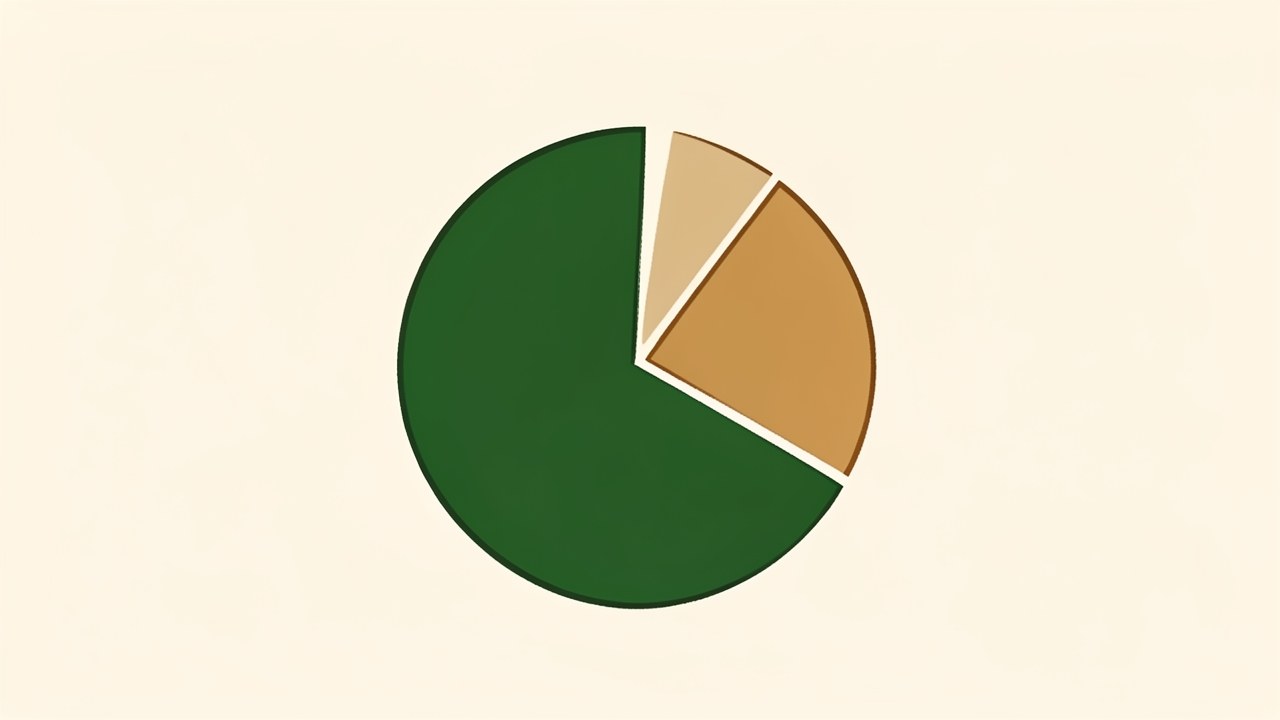
Mortgage amortization is the process of paying off a loan with regular payments over time, so that the amount you owe decreases with each payment. For a standard fixed-rate mortgage, your monthly payment stays the same for the entire loan term, but the portion that goes toward principal and the portion that goes toward interest change with every payment.
In the early years of the loan, most of your payment goes to interest because the loan balance is still high. As you make payments and the principal balance decreases, the interest portion of each payment shrinks, allowing more of your payment to go toward reducing the principal. By the end of the loan term, nearly all of your payment goes toward principal, which is why the loan is fully paid off exactly on schedule.
Sources: Consumer Financial Protection Bureau
How Amortization Schedules Are Structured
An amortization schedule is a table that shows each monthly payment, how much of it goes toward interest and principal, and the remaining balance after each payment. Lenders use a standard mathematical formula to calculate the monthly payment amount for a given loan amount, loan term, and interest rate. This formula ensures that, with equal monthly payments, the loan is paid off precisely at the end of the term.
With a typical fixed-rate loan, the combined principal and interest payment does not change over the life of the loan. However, the amounts that go to principal and interest do change. The schedule reveals that early payments are interest-heavy, while later payments are principal-heavy. This is why your mortgage balance decreases slowly at the beginning and more rapidly as time goes on.
- In the early years, a large share of each payment goes toward interest.
- As the balance decreases, the interest portion of each payment declines.
- The principal portion increases over time, accelerating balance reduction.
- The total monthly payment remains constant for a fixed-rate loan.
Sources: Consumer Financial Protection Bureau
Example: Amortization Without Extra Payments
The table below shows a simplified snapshot of how the payment is split at different points in the loan term, assuming no extra payments.
Sources: Total Mortgage
Example: Amortization With Extra Payments
The table below shows the impact at the same points in time, highlighting how the remaining balance drops faster and the loan term shortens significantly.
Sources: Total Mortgage
How Extra Payments Affect Amortization
Making extra payments directly toward the principal can significantly alter your amortization schedule. Because extra payments reduce the principal balance faster, less interest accrues over time, and the loan is paid off sooner.
These figures illustrate the power of extra payments, but your actual savings will depend on your loan amount, interest rate, term, and the timing of the extra payments. It is crucial to confirm with your lender that extra payments will be applied to the principal, not to future monthly payments. Federal rules require your servicer to comply with your payment instructions, but you should still verify to ensure your payments are directed as intended.
- Extra payments are most effective when applied directly to the principal.
- Check with your servicer to ensure extra payments reduce principal immediately.
Sources: Consumer Financial Protection Bureau, Total Mortgage
Calculating Interest Savings from Extra Payments
To calculate the interest savings from extra payments, you would need to run an amortization schedule that includes the additional principal payments. The savings come from two sources: you pay less interest because the principal balance is lower, and you have fewer payments because the loan term shortens. The exact amount depends on your specific loan details and how often you make extra payments.
The same principles apply to higher-rate loans. For example, on a $300,000, 30-year mortgage at 7% interest, paying an extra $100 per month can save $69,338 in interest and shorten the term by 4 years 3 months. An extra $200 per month would save $116,640 and shorten the term by 7 years 2 months, according to an example from Total Mortgage. While these numbers are illustrative, they show that even modest extra payments can lead to substantial savings.
If you want to estimate your own savings, you can use an online amortization calculator or create your own spreadsheet with the standard amortization formula. Be sure to include the same interest rate, loan term, and extra payment amounts to see how the schedule changes.
- On a $300,000, 30-year mortgage at 7%, an extra $100 per month can save $69,338 in interest and cut the term by 4 years 3 months.
- An extra $200 per month on the same loan can save $116,640 and cut the term by 7 years 2 months.
- Use an amortization calculator or a spreadsheet to estimate savings for your specific loan.
Sources: Consumer Financial Protection Bureau, Total Mortgage
Strategies for Making Extra Payments
There are several ways to make extra payments toward your mortgage principal. One common approach is to add a fixed amount to your monthly payment and indicate that it should be applied to principal. Another strategy is to make a lump-sum payment once a year, such as using a tax refund or work bonus. Some borrowers choose bi-weekly payments, where you pay half of your monthly payment every two weeks. This effectively makes one extra full payment per year, which can shorten the loan term.
However, bi-weekly payment plans may involve fees or may not be available for all loans, so you should check with your lender to see if this option is offered and whether any fees apply.
Regardless of the method, the key is to ensure that any extra funds are applied directly to the principal. Some servicers may automatically treat extra payments as payments toward future monthly installments unless you specify otherwise. Federal rules require servicers to comply with your instructions, but you should verify how your servicer applies extra payments to ensure you receive the full benefit.
- Add a fixed extra amount to your monthly payment and direct it to principal.
- Make an annual lump-sum payment to reduce principal faster.
- Consider bi-weekly payments if your lender offers them without fees.
- Always confirm that extra payments are applied to the principal balance.
Sources: Consumer Financial Protection Bureau, Total Mortgage
Frequently asked questions
What is an amortization schedule?
An amortization schedule is a table that shows each monthly payment on a loan, how much goes toward interest, how much goes toward principal, and the remaining loan balance after each payment. It helps you see exactly how your mortgage is paid down over time and how much interest you pay in total.
Sources: Consumer Financial Protection BureauWhy do I pay more interest at the beginning of my loan?
In the early years of a mortgage, your loan balance is the highest, so the interest charged on that balance is also the highest. Because the standard monthly payment is fixed, a larger portion of that payment goes to interest early on. As the balance decreases, interest charges shrink, allowing more of your payment to go toward principal.
Sources: Consumer Financial Protection BureauHow does making extra payments change my amortization schedule?
Extra payments directly toward principal reduce your loan balance faster, which reduces the amount of interest that accrues. This can shorten the overall loan term and decrease the total interest paid.
Sources: Consumer Financial Protection Bureau, Total MortgageSources
- Mortgage Key Terms | Consumer Financial Protection Bureau — Consumer Financial Protection Bureau
- How does paying down a mortgage work? — Consumer Financial Protection Bureau
- How do mortgage lenders calculate monthly payments? — Consumer Financial Protection Bureau
- Your mortgage servicer must comply with federal rules — Consumer Financial Protection Bureau
- Understand the different kinds of loans available — Consumer Financial Protection Bureau
- Extra Payment Calculator | With Lump Sum & Amortization — Total Mortgage